Download PDF Memory Drawing: Perceptual Training and Recall, by Darren R. Rousar
Yeah, when attempting to read a new book as this Memory Drawing: Perceptual Training And Recall, By Darren R. Rousar, you could start from particular time and also location. Structure interest in reading this publication or every book is needed. The soft data of this publication that is offered will be conserved in such specific collection. If you really have going to review it, simply comply with the generosity of the life. It will certainly boost your high quality of the life nonetheless is the function. To see exactly how you could obtain the book, this is much advised to asap. You could take different time of the begin to review.
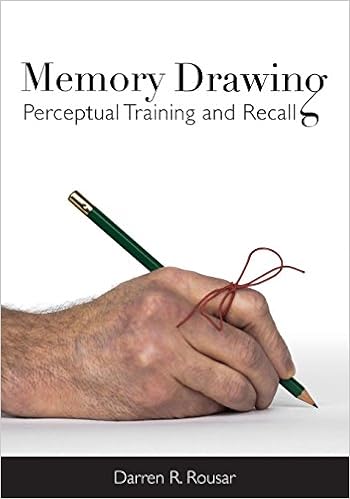
Memory Drawing: Perceptual Training and Recall, by Darren R. Rousar

Download PDF Memory Drawing: Perceptual Training and Recall, by Darren R. Rousar
Why you should review on a daily basis when you have spare time? Have you learnt the exact factors of you to read? Lots of are attempting to have analysis practice for their better future, however actually, it can be fallen short. What's wrong? Is the analysis behavior a society, truly routine, need, or something others? If you truly would like to know how many individuals attempt to influence themselves to have analysis behavior, you a likewise be influenced of it.
Naturally, from childhood years to permanently, we are constantly thought to like reading. It is not just reviewing the lesson book but additionally checking out whatever good is the option of obtaining brand-new motivations. Religion, scientific researches, national politics, social, literature, and also fictions will certainly improve you for not just one facet. Having more elements to understand and understand will lead you come to be somebody much more precious. Yea, ending up being priceless can be located with the discussion of just how your knowledge much.
To confirm exactly how this publication will affect you to be better, you could start reading by now. You could also have actually recognized the writer of this book. This is a very fantastic book that was written by specialist writer. So, you might not really feel uncertainty of Memory Drawing: Perceptual Training And Recall, By Darren R. Rousar From the title and also the writer additionaled the cover, you will be sure to review it. Even this is a straightforward book, the content is really vital. It will not need to make you really feel woozy after reading.
So now, just what's more you will undertake with this publication? Simply get Memory Drawing: Perceptual Training And Recall, By Darren R. Rousar asap to lead your thought to always develop. When you make small mind-set to consider hard book to read, you will certainly not make any development. And see exactly what you will certainly obtain, be sorry for will certainly always come behind. So, do you wish to turn into one of them? Naturally not! Reviewing as well as reading turned into one of the selections that you could attempt to conquer the troubles.
Review
"Much of the training in contemporary academic ateliers focuses on understanding and interpreting what you see in front of you. At the moment, there's a growing interest in supplementing those skills with the training of memory and imagination . . . [Mr. Rousar's]Â book is thoughtfully and clearly written, and will benefit both teachers and students interested in improving their powers of memory."-James Gurney, Artist and author
Read more
From the Author
Why should an artist bother to train their visual memory, and what does that even mean? Can't I just paint what's in front of me, or from a photograph, or from my imagination? These are the kinds of questions I get from students when I bring up the subject of memory drawing. The simple answer is, of course you can. However, having a well-developed visual memory can be of immense help to your from-life work as well as when working from your imagination.Whether the end-goal is drawing, painting or sculpting directly from life or from your memory, memory drawing begins with an intentional effort to visually observe the subject. How well the subject is remembered is directly related to how well it is observed. In other words, artists need to become expert observers in order to have exceptional visual memories. This is true for many fields and very often the memory skill of experts is geared towards their expertise. In a sense, they expect to see what they are trained to see. They look for it.As the subtitle of the book alludes to, this book is as much about learning to perceive what you see as it is about memory drawing.Memory Drawing: Perceptual Training and Recall more fully answers the above questions and provides a curriculum for training your abilities to visually perceive and training your visual memory.
Read more
See all Editorial Reviews
#productDescription {
color: #333333;
word-wrap: break-word;
font-size: small;
line-height: initial;
margin: 0.5em 0px 0em 25px;
}
#productDescription_feature_div > h2.default {
color: #CC6600;
font-size: medium;
margin: 0 0 0.25em;
}
#productDescription_feature_div > h2.books {
color:#333 !important;
font-size:21px !important;
line-height: 1.3;
padding-bottom: 4px;
font-weight: normal;
margin: 0px;
}
#productDescription_feature_div > h2.softlines {
color:#333 !important;
font-size:21px !important;
line-height: 1.3;
padding-bottom: 4px;
font-weight: bold;
margin: 0px;
}
#productDescription > p, #productDescription > div, #productDescription > table {
margin: 0 0 1em 0;
}
#productDescription p {
margin: 0em 0 1em 1em;
}
#productDescription h3 {
font-weight: normal;
color: #333333;
font-size: 1.23em;
clear: left;
margin: 0.75em 0px 0.375em -15px;
}
#productDescription table {
border-collapse: inherit !important;
margin-bottom: 0;
}
#productDescription table img {
max-width: inherit !important;
}
#productDescription table td {
font-size: small;
vertical-align: inherit !important;
}
#productDescription ul li {
margin: 0 0 0 20px;
}
#productDescription ul li ul {
list-style-type: disc !important;
margin-left: 20px !important;
}
#productDescription ul ul li {
list-style-type: disc !important;
margin-left: 20px !important;
}
#productDescription > ul ul li {
list-style-type: disc !important;
}
#productDescription ul li ul li {
margin: 0 0 0 20px;
}
#productDescription .aplus p {
margin: 0 0 1em 0;
}
#productDescription small {
font-size: smaller;
}
#productDescription.prodDescWidth {
max-width: 1000px
}
P.when('jQuery').execute(function($){
$("#productDescription table").each(function() {
var width = $(this).attr('width');
if (width) width += 'px';
else width = 'auto';
$(this).css('width', width);
var padding = $(this).attr('cellpadding');
if (padding) padding += 'px';
else padding = '0px';
$(this).css('padding', padding);
});
});
Product details
Paperback: 138 pages
Publisher: Velatura Press, LLC (March 9, 2013)
Language: English
ISBN-10: 0980045444
ISBN-13: 978-0980045444
Product Dimensions:
7 x 0.3 x 10 inches
Shipping Weight: 9.6 ounces (View shipping rates and policies)
Average Customer Review:
4.0 out of 5 stars
9 customer reviews
Amazon Best Sellers Rank:
#592,971 in Books (See Top 100 in Books)
The author does seem to have a slight bias toward a non-constructive approach to perception and drawing; but he still manages to keep the recommendations in this book fairly balanced. He certainly doesn't say that the perceptual and memory training advocated in the book is the end-all-be-all for every artist. Rather, he suggests that this kind of training is useful to artists with widely varying goals and approaches, which seems likely to be the case. The book is clearly written, and it includes both background material and lots of actual exercises along with the pictures required for them, and suggestions for creating your own exercises when you are finished with his. For all that, it's also not a very long book. Definitely a keeper.
It is always amazing to look at the grand art of the past - landscapes, cityscapes, figures in motion, genre scenes - and realize that artists of the past had no cameras to capture what lay before them. Rather they remembered. Yes, they often made quick on the scenes sketches, but then returned to their studios and used their recall of what they observed to flesh out their work. Today the skill of drawing from memory isn't given the emphasis it once was, in many ways handicapping artists who wish to better paint what they see or have seen. While today's emphasis on self expression seems to negate the need to remember what one sees and instead focus on what one feels, inspiration often comes from without....the way light and shadow play upon a group of trees, the texture of an abandoned object, the reflections on a window of a house by the sea.This book attempts to help artists to remember what they see, and then use that memory to make art that captures the reality of what was seen or the artist's particular view of what was before him or her. To do so a review of memory training is offered, along with excersizes. While the rapid presentation of images around us these days on TV or through films and videos teaches us all to be passive receivers of sensory information, artists can benefit from learning better to recall stimuli that attract them. This book can help do that.
What a loss to both to art & society that we are not all taught this in school as children. Finally a modern well written guide to visual memory & visualization training that is not based upon intangible methods like meditation but practical art instruction.
A great practice for artists and those wanting to develop their visual memory
Very sensible and helpful advice
There is no question that artists of the past used memory training as a means of study. The author clearly shows the historical and contemporary value of training one's visual memory and clearly explains the benefit to the serious student. Misunderstanding the purpose for memory training leads to a poorly reasoned attitude toward the practice. From the writings of Degas to Boisbaudran, training the visual memory is extolled and in Rousar's book both the importance of the practice historically and its practical use today are well defined.
It was a good book,but maybe not exactly what my daughter wanted.
If you are interested in improving your art, either drawing or painting, this is not the book that will do it. The author's premise is that memories of what you have seen are more important than actually, for instance, drawing from a model. If you are interested in making figures that are lifelike and compelling, then I doubt you will learn anything from this book. All the proof you need of how not to make great art is to go to the author's website and see his work. It does indeed look like someone who is drawing from memory. The figures look like mannequins, completely lifeless. They look like symbols for people rather than individuals. It's also not exactly a demanding read - I read it in one afternoon. It was given to me by a friend who said she no longer wanted it. She was right.
Memory Drawing: Perceptual Training and Recall, by Darren R. Rousar PDF
Memory Drawing: Perceptual Training and Recall, by Darren R. Rousar EPub
Memory Drawing: Perceptual Training and Recall, by Darren R. Rousar Doc
Memory Drawing: Perceptual Training and Recall, by Darren R. Rousar iBooks
Memory Drawing: Perceptual Training and Recall, by Darren R. Rousar rtf
Memory Drawing: Perceptual Training and Recall, by Darren R. Rousar Mobipocket
Memory Drawing: Perceptual Training and Recall, by Darren R. Rousar Kindle

No comments:
Post a Comment